
Doctor of Physical Therapy
Doctor of Physical Therapy
TAMUT DPT will admit the students for Fall 2026 and thereafter all cohorts will be admitted in the Fall.
The Doctor of Physical Therapy (DPT) program at Texas A&M University Texarkana (TAMUT) was intentionally created to improve rural healthcare by expanding access to physical therapy education and preparing graduates to serve rural and underserved communities. Our mission is both simple and bold: attract students from rural backgrounds, educate them with excellence, and empower them to return as highly skilled, compassionate physical therapists who strengthen the health of their home communities.
Through innovative, student-centered education, TAMUT DPT prepares entry-level physical therapists to address the unique challenges of physical therapy practice including rural practice with confidence, creativity, and leadership. Our graduates are equipped not only with strong clinical skills, but also with the advocacy, adaptability, and professional identity needed to improve access to care across diverse rural populations.
Located in a four-state service region and within close proximity to Shreveport, Little Rock, and Dallas, TAMUT offers the resources of The Texas A&M University System alongside the supportive, close-knit environment of a regional campus. This combination creates an accessible and affordable pathway for rural and first-generation students to pursue doctoral-level healthcare education. Low tuition and fees along with graduate scholarships further reduce financial barriers and support our mission of access for rural and low resource area students.
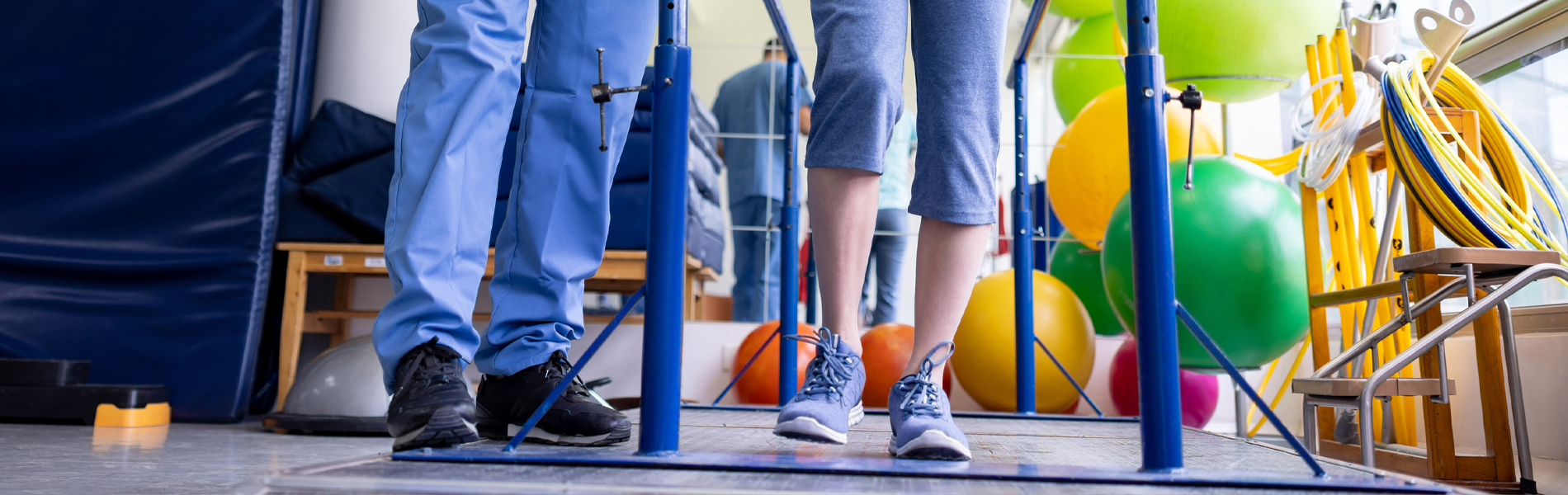
A&M Texarkana is a traditional program with live, online lecture courses. The seven-semester DPT curriculum is delivered in an active-learning format designed to promote critical thinking, clinical reasoning, and professional confidence. Each semester includes immersive on-campus lab experiences in the DPT lab and hospital simulation environments. Students engage with motion analysis technology, smart classrooms, virtual reality, and interprofessional learning while working closely with faculty and clinical experts.
Clinical education is a cornerstone of the TAMUT DPT mission. Students complete three clinical experiences totaling 31 weeks across inpatient and outpatient settings. At least one clinical rotation occurs in a rural health setting, ensuring that every graduate gains firsthand experience serving rural communities. The final clinical rotation allows students to pursue specialty interests while maintaining broad exposure across the continuum of care.
Through intentional recruitment, innovative education, and rural-focused clinical training, TAMUT DPT is building a workforce of physical therapists who are prepared to improve access and lead the future of rural healthcare.
Program Information
Degree Name: Doctor of Physical Therapy
Degree Type: Doctorate
Format: Hybrid
Credit Hours: 99
Catalog: Program Requirements
Questions: 903-223-3000
Program Application (PTCAS) | Apply to A&M Texarkana Today | Request More Information | Visit Us
Why Earn Your Doctor of Physical Therapy from A&M Texarkana?
Innovative. Immersive. Supportive.
Pursue your DPT degree within an innovative format consisting of live, distance education with on campus lab experiences to prepare you to make a meaningful impact in the communities you serve.
Work closely with faculty who know your name within a small, supportive cohort designed to help you succeed. Train using advanced tools and technology like motion analysis and virtual reality within our state-of-the-art DPT lab and simulation hospital. Build lasting connections with faculty and peers who will support your professional growth for years to come.
Through our innovative format, you’ll engage in dynamic online learning while gaining the hands-on clinical experience essential to becoming a confident physical therapist. Through immersive lab experiences and clinical rotations, you’ll connect classroom learning with real patient care and develop the skills needed to thrive in today’s clinical environments.
At A&M Texarkana, you’ll gain experience serving communities facing limited access to physical therapy and rehabilitation services and make a meaningful difference where care is needed most. Graduate prepared to lead, advocate, and improve movement and functional outcomes for patients in underserved and rural communities.
Program Highlights
Doctoral Experience Rooted in Clinical Excellence
Benefit from live, online coursework while gaining hands-on experience through immersive labs and clinical experiences. Train across inpatient, outpatient, rural health, and specialty care settings, preparing you for broad patient populations and advanced practice excellence.
Prestige of The Texas A&M University System
Benefit from the reputation and resources of the Texas A&M University System while learning in a highly supportive, student-centered cohort environment.
Evidence-Based Training for Tomorrow's Healthcare Leaders
Prepare to lead with confidence and creativity, ready to address the unique challenges of physical therapy practice. Develop strong clinical skills and become the adaptable patient advocate across many populations.
At A&M Texarkana, you can pursue your DPT degree with confidence in both your educational and financial future. Affordable tuition and graduate scholarship opportunities help reduce financial barriers so you can focus on achieving your career goals and not overwhelming student debt.
DPT FAQs
When can I apply?
A&M Texarkana DPT is a Fall Semester start program. Applications through PTCAS must be submitted by October 15 for consideration of the cohort beginning in the following year. PTCAS opens the applications for each cycle in June.
How do I apply?
TAMUT DPT utilizes the PTCAS application system. Please contact DPT@tamut.edu if you need assistance with the application process.
Can I work during the DPT program?
Some students can manage working. This is left to the discretion of the student. However, if a student is working and the academic coach or any faculty member recognizes signs of distress or inability to keep up in classes then the student will work with the academic coach on steps to move forward. If this issue becomes serious the student will be placed on a professional behavior contract.
I am already a PTA or have previously been enrolled in a DPT program but did not finish the program. Will my previously earned hours count toward the degree?
All courses required for the Doctor of Physical Therapy degree, both didactic and clinical, must be completed with the TAMUT Department of Physical Therapy. The TAMUT Department of Physical Therapy does not grant advanced placement, credit for experiential learning, or transfer credits from another program or institution.
Can I enroll if I have learning accommodations or other ADA accommodations?
Yes, TAMUT has a Disability Services Office to work with students for accommodation.
What kind of computer do I need?
Technology Requirements
The DPT curriculum is delivered using a hybrid education model. The DPT Program encourages faculty and students to develop, integrate, and/or use innovative technology (approved for use by the University) in ways that improve course delivery, active learning, coaching, communication, and student outcomes. This model requires that students possess the necessary technology to participate fully in the program. Additional recommendations are made so that students can create a distance-learning environment suitable for physical therapist education. These requirements and recommendations are shared with prospective students to provide prospective students with the transparency necessary to make an informed decision about participation in the TAMUT DPT program.
Laptop Computer
The recommended minimum hard drive is 512 GB with RAM of 16 GB.
|
|
Windows |
Mac |
|
Processor |
i5 or i7 Intel® Core™, Apple M1, or equivalent processor |
i5 or i7 Intel® Core™, Apple M1, or equivalent processor |
|
Display |
13-inch display (or larger recommended) 1024 x 768 screen resolution or better |
13-inch display (or larger recommended) 1024 x 768 screen resolution or better |
|
Hardware |
Webcam (internal or external) and microphone required Phone Tripod – for use in testing |
Webcam (internal or external) and microphone required Phone Tripod – for use in testing |
|
Operating System |
Windows 10 or higher |
Apple OS 10.15 (Catalina) or higher |
|
RAM |
16GB (or larger) |
16GB (or larger) |
|
Hard Drive |
512GB preferred |
512GB preferred |
|
Networking |
Wireless: 802.11g (or higher) |
Wireless: 802.11g (or higher) |
|
Bandwidth |
Minimum 15Mbps Download/2 Mbps Upload Speed |
Minimum 15Mbps Download/2 Mbps Upload Speed |
|
Software |
Microsoft Office 365 (Available for free download from TAMUT Digital Backpack.) |
Microsoft Office 365 (Available for free download from TAMUT Digital Backpack.) |
|
Acrobat Reader |
Acrobat Reader Other computer software/ applications required by the program |
Acrobat Reader Other computer software/ applications required by the program |
Mobile Device
Android, Apple, and Microsoft products are acceptable and must have mobile broadband capabilities. (Please note: Microsoft Surface Pro can be considered under both laptop and mobile device categories. If you are considering a Surface Pro for use as a laptop, please see minimum computer requirements above.) Please see below for example products:
Android - Example products include phones and tablets from Acer, ASUS, Google, HTC, and Samsung. Android operating system version 6.0 or newer is required.
Apple - Example products include the iPhone and iPad of various generations. Apple operating system version 9.0 or newer is required.
Mobile broadband capability for the mobile device is suggested to provide an internet connection when a local wireless network is not available.I want to become a PT but I don’t want to work with geriatrics (or pediatrics or other populations). Can my clinicals and coursework omit these courses?
When pursuing a Doctor of Physical Therapy (DPT) degree, you are training to become a licensed professional capable of treating a wide variety of patients with diverse needs. The DPT curriculum is designed to provide a comprehensive education, covering all major aspects of physical therapy, from pediatrics to geriatrics, orthopedics to neurology, and beyond. Here’s why every course in the program is essential:
- Building a Strong Foundation - As a physical therapist, you are likely to encounter patients of all ages and backgrounds, each with unique conditions and goals. The courses in a DPT program are structured to help you develop a strong, versatile foundation in both the science and art of physical therapy. Whether you intend to specialize in sports medicine, orthopedics, or any other field, this foundational knowledge is crucial. It equips you with the ability to recognize, evaluate, and treat a wide range of injuries and conditions—even those outside your preferred specialty.
- Meeting Licensure Requirements - To practice as a licensed physical therapist, you must pass the National Physical Therapy Examination (NPTE). The NPTE tests your competence in various areas of physical therapy, not just the one you might prefer or specialize in. By completing the entire DPT curriculum, you ensure you are well-prepared to pass this comprehensive exam and meet all the requirements for licensure.
- Gaining Insight and Empathy - Exposure to different patient populations and conditions, even those outside your main interest, helps you develop a deeper understanding of the challenges people face. This insight builds empathy, communication skills, and a well-rounded perspective—qualities that are essential for providing high-quality care, even within a specialized field like sports medicine.
- Long-term Career Flexibility - The healthcare landscape is constantly evolving, and your career path may shift over time. What interests you now may not be your focus in the future. Completing all aspects of your DPT program ensures that you have the flexibility to adapt to new opportunities, specializations, or patient populations as your career progresses. You’ll be prepared to pivot if your interests or circumstances change.
What is the faculty to student ratio?
For didactic classes the ratio is dependent on the course content. Generally for didactic classes the ratio will be 1 faculty for 20 to 30 students. The number varies with the content of the class. There may be classes with both core faculty and adjuncts and the ratio may be 1 to 10. For lab classes the ratio will be 1 faculty to 10 students.
Can I pick my own clinical sites?
You will work with the Director of Clinical Education for clinical site placements.
Do I need a background check?
Some clinical placements require a background check. Potential applicants who wish to be sure they can take the National Physical Therapy Examination and become licensed in Texas should contact the Texas Board of Physical Therapy Examiners and follow their instructions for a pre-background check.
Is there a distance education fee charged?
Yes, for courses that are offered synchronously in distance education (online). This fee is called the Web and Distance Education fee. This fee is not charged for the lab-based courses held during the campus experience.
Non-Employee/Student Grievance
If you are not a current student or employee of Texas A&M University–Texarkana and would like to submit a grievance, please use the EthicsPoint - Texas A&M University System reporting system
Note: A link to EthicsPoint can also be found in the website footer under "Risk, Fraud, and Misconduct Hotline – Texas A&M University System."
Doctor of Physical Therapy applicants who wish to file a complaint regarding program accreditation or compliance with accreditation standards may submit their concern directly to the Commission on Accreditation in Physical Therapy Education (CAPTE) at 703-706-3245 or accreditationsupport@apta.org.
NOTE:
Graduation from a physical therapist education program accredited by the Commission on Accreditation in Physical Therapy Education, 3030 Potomac Ave., Suite 100, Alexandria, Virginia 22305-3085; phone; 703-706-3245; accreditationsupport@apta.org is necessary for eligibility to sit for the licensure examination, which is required in all states. Candidacy is considered to be an accredited status, as such the credits and degree earned from a program with Candidacy status are considered, by CAPTE, to be from an accredited program. Therefore, students in the charter (first) class should be eligible to take the licensure exam even if CAPTE withholds accreditation at the end of the candidacy period. That said, it is up to each state licensing agency, not CAPTE, to determine who is eligible for licensure. Information on licensing requirements should be directed to the Federation of State Boards of Physical Therapy (FSBPT; www.fsbpt.org) or specific state boards (a list of state boards and contact information is available on FSBPT's website.
Effective 5/13/2026, Texas A&M University Texarkana has been granted Candidate for Accreditation status by the Commission on Accreditation in Physical Therapy Education (3030 Potomac Ave., Suite 100, Alexandria, Virginia 22305-3085; phone: 703-706-3245; email: accreditationsupport@apta.org). If needing to contact the program/institution directly, please call (903) 223-3142 or email DPT@tamut.edu. Candidate for Accreditation is an accreditation status of affiliation with the Commission on Accreditation in Physical Therapy Education that indicates the program may matriculate students in technical/professional courses. Achievement of Candidate for Accreditation status does not assure that the program will be granted Initial Accreditation.